How to Improve SEO with AI: A Practical Playbook for Teams That Want Rankings, Not Hype
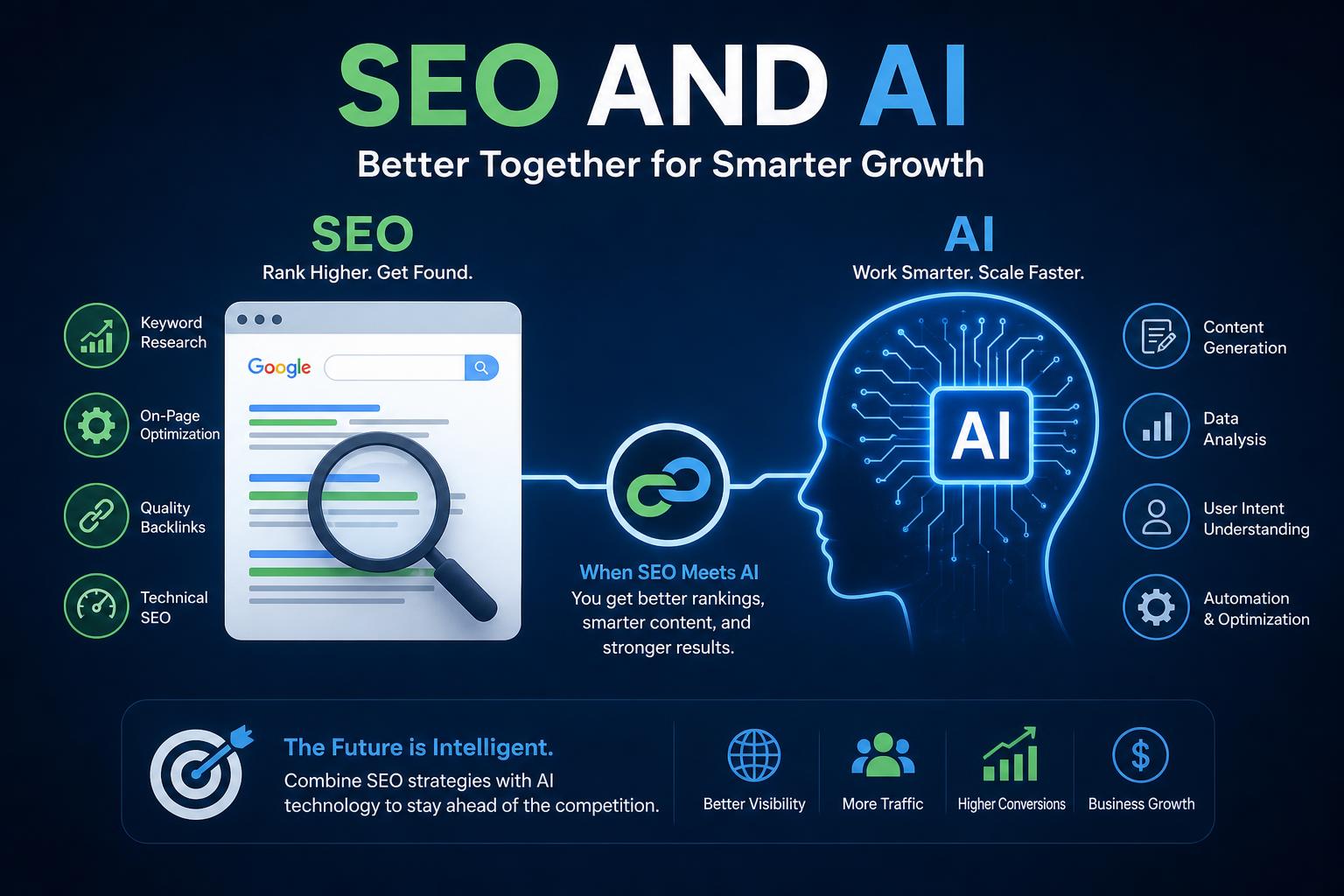
AI can speed up seo work, but only if you use it to sharpen strategy, not mass-produce average content. The teams winning with seo are using AI to find opportunities faster, improve content quality, and scale execution without diluting expertise.
Use AI for seo research that would normally take hours
The biggest seo mistake with AI is starting at the draft. Start with research, because that is where AI saves the most time and prevents weak briefs.
Use AI to cluster keywords, map search intent, and surface gaps in competitor coverage. For example, if you are targeting “ai blog post generation,” AI can break that into intent buckets such as tool comparisons, workflow guides, quality control, and scaling content production. That gives you a cleaner content plan than a spreadsheet of 500 loosely related keywords.
A practical workflow looks like this:
- Export your keyword list from Ahrefs, Semrush, or GSC.
- Ask AI to group terms by intent, funnel stage, and SERP format.
- Pull the top 10 ranking pages and have AI summarize common angles, missing subtopics, and weak H2 coverage.
- Turn that into a content brief with clear search intent, target entities, and internal linking targets.
If you run local seo, AI can help you spot location modifiers and service combinations faster. A page aimed at small business visibility should not compete with broad “seo” guides. It should address local proof points, map pack visibility, and conversion-focused content, similar to the approach used in SEO for Small Businesses: The Complete Guide to Building Local Visibility and Growth.
The output is not “more content.” It is better content targeting less ambiguous queries.
Build briefs with AI, then force them to be specific
Good seo content fails when the brief is vague. AI can generate an outline in seconds, but the real value comes from making it opinionated and grounded in evidence.
If you use WordGenie for AI Blog Post Generation, treat it like a briefing engine, not a replacement for editorial judgment. Feed it the target keyword, the audience, the SERP intent, and the unique angle you want. Then add constraints: required examples, preferred sources, internal links, and claims that must be supported with data.
For instance, if the topic is “How to improve SEO with AI,” a weak brief says “cover AI tools for seo.” A strong brief says:
- Explain how AI improves keyword clustering and entity coverage.
- Show how to use AI for content refreshes on pages that already rank between positions 8 and 20.
- Include an editorial workflow that prevents generic phrasing and hallucinated facts.
- Reference AI Humanizer Rephrasy as a final polish step for readability and tone consistency.
That level of specificity matters because seo content should win on usefulness, not volume. If AI produces a generic outline, you get a generic article. If the brief includes a real workflow, the article has a chance to rank and convert.
Use AI to improve content quality, not just output speed
Search engines reward pages that fully answer a query. AI helps when it improves coverage, clarity, and structure faster than a human team can do alone.
One of the highest-leverage seo tasks is content expansion on pages that already have traction. Take a page ranking in positions 6 to 15. Use AI to identify missing subtopics by comparing it against the top five competitors. Then add the sections that address those gaps with specific examples.
Example: if your article covers internal communication, AI can suggest sections on meeting summaries, cross-functional updates, and decision logs. That is the kind of tactical value seen in posts like How AI improves internal communication, where the topic is broad but the execution benefits from structured, practical subpoints.
AI Humanizer Rephrasy is especially useful when a draft starts sounding flattened by machine-generated patterns. Use it to vary sentence rhythm, remove repetitive phrasing, and restore a human editorial voice. That matters for seo because readable content keeps people on the page longer, and engagement signals often track with stronger performance over time.
A good quality-control pass should ask:
- Does every heading answer a real search intent?
- Are examples concrete enough to be copied into a workflow?
- Does the article repeat the same idea with different wording?
- Would an SEO expert trust this as a working draft, not a polished template?
Refresh existing pages before publishing more AI content
Most seo gains come from improving what already exists. New articles help, but content refreshes usually deliver faster returns because they leverage existing URLs, backlinks, and crawl history.
Use AI to audit pages that have slipped in rankings or stopped earning impressions. Pull GSC data for the last 3 to 6 months, find pages with declining clicks, and ask AI to classify likely causes: outdated stats, thin sections, poor intent match, weak internal links, or missing entities.
Then update the page with targeted fixes. If a guide on AI tools lacks comparison tables, add one. If a page answers “what is X” but not “how do I use it,” expand the practical section. If a post is too verbose, trim it with AI Humanizer Rephrasy so the prose moves faster without losing substance.
This is also where AI can support content consolidation. If you have three thin posts on adjacent topics, merge them into one stronger page. That reduces cannibalization and improves topical authority. For example, a cluster around AI content quality could combine posts about detection, humanization, and workflow into a single authoritative resource, while keeping supporting links to pieces like Wie genau funktionieren AI Detektoren heutzutage and Bypass AI content where relevant.
Use AI to strengthen internal linking and topical authority
Internal linking is one of the most underused seo levers, and AI is good at spotting link opportunities at scale.
Feed your content inventory into AI and ask it to map related concepts, supporting articles, and missing links between commercial and informational pages. You are not looking for random cross-links. You want logical pathways that guide readers and help search engines understand your site structure.
For example, a page on AI-powered seo should link to a broader guide on ai tools, a small business seo resource, and a content-generation workflow page. If your site covers broader AI themes, supporting links to articles like Godmode AI » Die Zukunft der intelligenten Technologie may help reinforce the topical cluster around AI capabilities and use cases.
A practical internal linking rule for seo teams:
- Every new post should link to 3 to 5 relevant existing posts.
- Every high-value page should receive at least 3 contextual internal links from supporting content.
- Anchor text should be descriptive, not repetitive.
- Link from informational pages to conversion pages where intent aligns.
AI can generate link suggestions, but you still need to approve them manually. A bad internal link is not harmless. It muddies context and weakens topical architecture.
Pair AI generation with human editing standards
AI content does not fail because it is AI-generated. It fails because no one edits it like a professional publication. Search engines do not need every article to sound literary, but they do need it to be accurate, original in angle, and free of repetitive machine habits.
Use AI to draft, then edit for three things: factual accuracy, specificity, and voice. If a section uses broad claims like “AI saves time,” replace them with measurable outcomes whenever possible. For example, a content team using AI for clustering and outline generation can cut brief creation from 2 hours to 20 minutes per article. That is a real seo efficiency gain, not a slogan.
Human editing should also remove empty phrases, weak transitions, and duplicated ideas. If the copy sounds like it could fit any topic, it is too generic. The goal is to make the page sound like it was written by someone who has actually shipped seo campaigns.
That standard matters even more on pages where user trust is central. Legal, financial, and health-related content should be treated with extra caution, which is why AI support is better used for drafting and structuring than for final authority claims. A post like Kündigungsschreiben mit GPT sinnvoll? is a reminder that some topics demand stricter editorial control than others.
Measure AI-assisted seo by performance, not by production volume
If AI doubles your publishing pace but rankings stagnate, you have not improved seo. You have only increased output.
Track the same metrics you would use for any content program: impressions, clicks, average position, CTR, conversion rate, and link acquisition. Then compare AI-assisted pages against human-only pages. A useful test is to review a 90-day window after publication or update. If AI-assisted briefs produce stronger time-to-rank and better content coverage, keep the workflow. If they inflate thin articles, cut them back.
For most teams, the biggest gains appear in three areas:
- Faster brief creation
- Better content refresh workflows
- Cleaner topical clustering and internal linking
WordGenie fits well here because it can support the full content pipeline, from AI Blog Post Generation to scalable draft creation for seo teams that need speed without sacrificing structure. Used properly, it becomes part of a system, not a shortcut.
Where AI should stop in an seo workflow
AI should not decide business priorities, page intent, or final claims. Those are editorial decisions, and they shape whether the content actually earns rankings and revenue.
Stop AI at the point where judgment matters most. Let it surface patterns, suggest outlines, draft sections, and recommend links. Then have an SEO expert decide what deserves to exist, what should be cut, and what needs evidence. That division of labor is what makes the process scalable.
If you want to see how this applies across different content types, look at use cases beyond seo. AI-driven editorial systems are already being used for communication, image generation, and content moderation, as shown in posts like Bilder erzeugen mit KI – wo sind die Grenzen? and How AI improves internal communication. The pattern is the same: AI accelerates execution, but expertise sets the direction.
Make AI a competitive advantage in seo, not a content factory
The teams getting real seo results from AI are not publishing more because they can. They are publishing better because they work from stronger research, better briefs, faster refresh cycles, and tighter editorial control.
Start with one high-value workflow this week: use AI to cluster keywords, generate a brief in WordGenie, draft the article, run it through AI Humanizer Rephrasy, and then update internal links before publishing. If that single process improves rankings or cuts production time by 30 percent, you have a repeatable seo advantage.
CTA: Audit one underperforming page today, rebuild the brief with AI, and test WordGenie on the next article. If the updated page does not outperform the old one within 90 days, the workflow needs refinement, not more content.
FAQ
How can AI improve SEO content creation?
AI improves seo content creation by speeding up keyword clustering, outline generation, content gap analysis, and revision workflows. The best results come when AI supports research and drafting, while an SEO expert handles intent, accuracy, and final edits.
Can AI-generated content rank on Google?
Yes, AI-generated content can rank if it is original in angle, accurate, and genuinely useful. Search performance depends more on content quality, topical relevance, and internal linking than on whether AI was used.
What is the best way to use AI for SEO briefs?
Use AI to turn keyword lists into intent-driven briefs. Include target audience, primary query, subtopics, required examples, internal links, and claims that need verification. This creates stronger seo articles than generic outlines.
Should SEO teams use AI humanizers?
Yes, when used as an editing layer, not a disguise. Tools like AI Humanizer Rephrasy help reduce repetitive phrasing, improve flow, and make AI drafts read more naturally. They should not replace human review for accuracy and strategy.
How does WordGenie fit into an SEO workflow?
WordGenie can support AI Blog Post Generation, helping SEO teams move from keyword research to structured drafts faster. It is most effective when paired with human editing, internal linking, and post-publication performance tracking.